Visa rules
New visa rules have been imposed with effect from 1st January 2012
where online visa must be applied for countries except Singapore and
Maldives before entering the country. This "Tourist ETA visa" is valid
for 3 months, starting from the day it is been approved and can be
applied for here:
[2].
The visa is double entry which means you can enter the country twice
during the three months' time. In each entry, your maximum length of
stay is 30 days.
Visa charges are US$ 10 for SAARC countries (Bangladesh, Bhutan, India, Maldives, Nepal and Pakistan) and US$ 20 for others.
Extensions can be made at the Department of Immigration (011-532
9300; www.immigration.gov.lk; 41 Ananda Rajakaruna Mw, Col 10;
9am-4.30pm Mon-Fri), in Punchi Borella, Colombo. The last payments are
received at 3.30pm. The department sets the cost in US dollars, but you
pay in rupees. A visa extension gives you a full three months in the
country and you can apply for your extension almost as soon as you
arrive (the 30-day visa given upon entry is included in the three
months). A further three-month extension is possible, but you must again
pay the extension fee plus another Rs 10, 000. Extensions beyond this
are at the discretion of the department, and incur a Rs 15, 000 fee plus
the extension fee.
See above for fees for the first 90-day extension.
The whole process takes about an hour. First, go to the 1st-floor
office and pick up a visa-extension application form from the person
closest to the door. You then work your way along the counter, through
six or seven stages of stamps and receipts. Then you wait 30 minutes or
so while your passport works its way back down the counter and is
returned to you.
You will need your passport, an onward ticket and either a credit card or foreign exchange receipts.
Tourist visas for India can be obtained at the High Commission of
India (242 1605; info.colombo@mea.gov.in; 36-38 Galle Rd, Col 3). The
cost of a six-month visa depends on your nationality, and you’ll need to
supply two photos. It takes at least five days to process a tourist
visa, but only one day if you are a foreign resident in Sri Lanka. Lines
tend to be very long. You can also obtain an Indian visa in Kandy at
the Assistant High Commission of India (081-222 4563;
ahciknd@mailandnews.com; Box 47, 31 Rajapihilla Mawatha). Kandy makes a
good alternative to Colombo because it’s not as busy.
[edit] By plane
SriLankan Airlines [3] (flight code
UL) is the national flagship carrier operating to and from
Colombo-Bandaranayake International Airport (ICAO: VCBI
, IATA: CMB
) [4]. Flights are available from cities throughout Europe, Southeast Asia, China, Japan, the Middle East,
India, and
Pakistan. SriLankan Air also flies to the nearby destinations such as
Chennai,
Trivandrum,
Mumbai,
Delhi,
Cochin,
Bangalore and the
Maldives.
Emirates Airlines [5] connects many major European cities and others worldwide to Colombo with several flights daily from
Dubai and
Singapore to Colombo. The airline operates 777-300ER wide body aircraft on these routes.
Indian carrier
Kingfisher Airlines started operations on
the Bangalore-Colmbo route in early 2009, enabling easy links to Sri
Lanka via India. Kingfisher Airlines has ceased the operation of direct
flight from Bangalore to Colombo. Now Kingfisher fliers have to fly
through Chennai. Other options are Jet Airways or its offshoot Jetlite.
Mihin Lanka [6], Sri Lanka's first (and only)
low-cost airline started operating in 2007. They fly to
Dubai in
United Arab Emirates and
Tiruchirapalli and
Buddhagaya in
India. Mihin Lanka now has non-stop services from
Colombo to
Dhaka and
Jakarta.
Qatar Airways has 3 daily non-stop flights from
Doha to
Colombo.
Jet Airways has many flights a day to
Colombo from
Delhi,
Mumbai, and
Chennai.
The budget airline
Air Asia [7]
now operates from Kuala Lampur, Malaysia to Colombo, Sri Lanka. This
opens ups cheap flight for visitors from South East Asia as well as
those who are visiting South Asia and then heading to South-East Asia
(or vice-versa).
Oman Air [8]
has announced flights to Colombo via Muscat and Male, they seem to have
special prices for their new destinations' start (Frankfurt, Munich,
Paris, Male, colombo)
Royal Jordanian [9] has a daily flight from
Amman to
Colombo.
Ukrainian International Airlines now has a flight from
Kiev to
Colombo via
Dubai.
Other airlines such as Singapore Airlines, Malaysia Airlines,
Thai International Airways, Cathay Pacific, Saudi Arabian, Condor
(Germany), Spicejet (India), Meridiana (Italy), and JetAirFly (Belgium)
operate to Colombo-Bandaranayake from their respective home bases.
An
Airport Express Luxury Train Service operates between Airport Station (Bandaranayake International Airport) and Colombo Secretariat Station (Near Colombo Hilton)
[10]. Currently the ticket is prices at Rs 500 for a journey.
[edit] From Canada/USA
There are no direct flights that reach Sri Lanka from cities outside
Asia, the Middle East and Europe. From the American West Coast, the
distance is almost half the globe. Depending on your preferences, and
how much spare time you have, you can consider a stopover in Europe or
SE Asia or take a non-stop flight over the North Pole to
New Delhi or
Mumbai from
Atlanta,
Chicago,
Newark,
New York City, or
San Francisco.In
many cases, this may be the fastest route, but check if an Indian
transit visa is required. Another fast and easy idea is to use Middle
Eastern Airlines from the US with stopovers in either Qatar, Bahrain, or
the UAE (no transit visa required). For example Dubai based airline
Emirates offers daily flights from SFO,LAX,IAH, and Toronto(YYZ) with a
very short stopover before the short flight to Colombo.
Emirates Airlines offer non-stop service to Colombo two to three times daily from
Dubai.
[edit] By ship
The
Tuticorin-
Colombo
passenger ferry service, suspended for years due to the civil war,
commenced services in June 2011. The Scotia Prince ran twice a week
until November 2011 when the ferry was discontinued indefinitely.
[11] The company has yet to announce an official date for resumption of the service.
[12]
If you would like to travel via cargo ship, please note that
according to the customs office in Tuticorin it is considered illegal
for a cargo ship to transport passengers from the Tuticorin Port to Sri
Lanka.
[edit] Cruise Ship
Sri Lanka has been included in its destinations list for 2011 by American cruise operator Zegrahm Expeditions
[13]. The line plans four voyages that stop in Sri Lanka in 2011.
[edit] Get around
[edit] Three-wheeler
The most common mode of transport in Sri Lanka is via a three-wheeled automobile appropriately referred to as a
three-wheeler (
Tri-Shaw). Also known as
Tuk-Tuks
from the noise of their motors. These operate in a manner similar to
taxis, and in many situations are a convenient and highly cost-efficient
way to get around. Safety is a concern however, as none of them have
seat belts and they are open to the sides.
Three-wheelers are ubiquitous in Sri Lanka. On any given street,
you'll hardly have to wait more than a couple of minutes without one
going by that you can wave down. If you're travelling with luggage,
there are slightly larger three-wheelers with more space for your bags
that you can look for.
While it may be the most novel way to get around, it may not be
the most cost efficient in every situation. Public transport is cheaper
by far, and most Three-wheel drivers tend to over-price foreigners, so
never agree to the first estimate. The best price you can get is about
Rs. 50 - 75 per Km for short jouneys and about Rs. 30 - 50 for long
journeys ( more than 15 km). If you do come across a metered Tri-Shaw
make sure the meter is switched on. Taxis are slightly more expensive
but surely a lot safer. Having said that, you probably have not
experienced everything Sri Lanka has to offer until you travel in one.
[edit] By car
Rented cars usually turn out cheaper than three-wheelers, and are less prone to road accidents--and are recommended by most hotels.
Rented cars often come with their own drivers. Often the
automobile itself is free, whereas the driver will charge a fee for his
services. Some drivers/guides are government-licensed; some are
extremely knowledgeable and multi-lingual, specializing in historical
and cultural knowledge, and environment/natural history for your visits
to the ancient sites and the natural reserves.
[edit] Tour operators
Tour Operators are happy to get you a van and a driver who will take
you all over the island but beware, the roads are bumpy and slow. If you
book off-the-cuff when you arrive, ask to be shown on a map where you
are going before agreeing to any 'tour' of the island and research
before you arrive so that you have a clear idea of where you might like
to travel. Senseless backtracking to lengthen the trip and increase the
cost is a real danger, as is a driver's wish to take you on unwanted
shopping expeditions in an effort to gain commission. Travel websites
specialising in Sri Lanka are easily found and have greatly increased
the choice that is readily available to independent travellers seeking
tailor-made tours. The best of them will produce clearly-stated travel
itineraries and some are flexible enough to make late changes to
itineraries. Ask to see their Booking Conditions and anti-fraud
policies.
[edit] Taxi companies
Taxis are a better way of getting around Colombo than three wheelers
as, due to the metering, they often turn out to be cheaper. Rates are
about USD0.55 and they have full day packages (approx 8 hours and 80km)
for around USD 40.
They will also take you outstation for around USD 0.30-0.35 per
km with no waiting charges. You can also set up your own itenary and
travel around that way as opposed to whatever the tour operator tells
you.
[edit] By bus
For those on a budget buses are everywhere. They're sometimes crowded
and uncomfortable, but they get you around for almost nothing; it costs
about a dollar to get half-way across the island. If you're planning on
splashing out,
AC buses run most routes for twice the price,
which offer air-conditioning and a guaranteed seat. However, they're
still uncomfortable. Bus stations are confusing places, especially the
big ones, but almost everyone will be delighted to practice their
English and help you. Also, when travelling by bus, it is local
etiquette in most buses to provide or give up the very front passenger
seats to members of the clergy such as monks or priests if they are
present.
[edit] By train
Sri Lanka has an extensive railway system serving all major towns and
cities in the island except for the North. There are special
Observation cars for tourists that like to take in the scenery.
Trains can be slower than buses, depending if you are on a line
that offers an express train or not, but more comfortable and even less
expensive than buses.
You can look up train schedules on the official site:
[14] or using one of the two Android Apps available:
[15] [16]. Be advised, however, that these will only give you results for direct connections between stations.
There are 3 classes of railway cars, although 1st and 2nd class
are only available on some Intercity and Express trains. Travelling 3rd
class is not as bad as it may sound. Often the difference between 3rd
and 2nd class is only a missing arm rest between seats.
Trains are sometimes crowded, especially in the morning and late
afternoon. Also, observation car seats for the lines popular with
tourists (like the Colombo-Kandy line) are often booked out several days
in advance in the high season. So whenever possible you should get a
reservation beforehand: see
[17] and
[18] for more information
The Railway system in Sri Lanka is very picturesque when entering
the hill country because of the winding tracks along the mountains
especially on the Badullu-Nanu Oya line. Make sure, if you can, to sit
on the right side of the train, as it offers the better view.
Travel by Train is itself a journey to remember, be it travelling
to Central Srilanka or travelling on the coastal line is just
amazing.Highly recommended to travel by train if you are travelling
outside Colombo. The Hill train to Badulla is a amazing journey.
Preferably choose the express trains, and try to get a reservation
beforehand, if you can.
[edit] By plane
Sri Lankan Airlines operates small
Seaplane service to
destinations such as Nuwara Eliya, Kandy, Galle and many more locations.
This is perfect for Photography trips because you can get a bird's eye
view of the island and takes less time to get to a destination than
using the road. Also the seaplanes land on picturesque lakes and tanks
around the island.
Aero Lanka operates domestic flights between Colombo City Airport - Ratmalana, Jaffna and Trincomalee
- Please be aware that to get into many of the tourist sites in
Sri Lanka, you, as a foreigner will be charged up to x10 more than
locals.
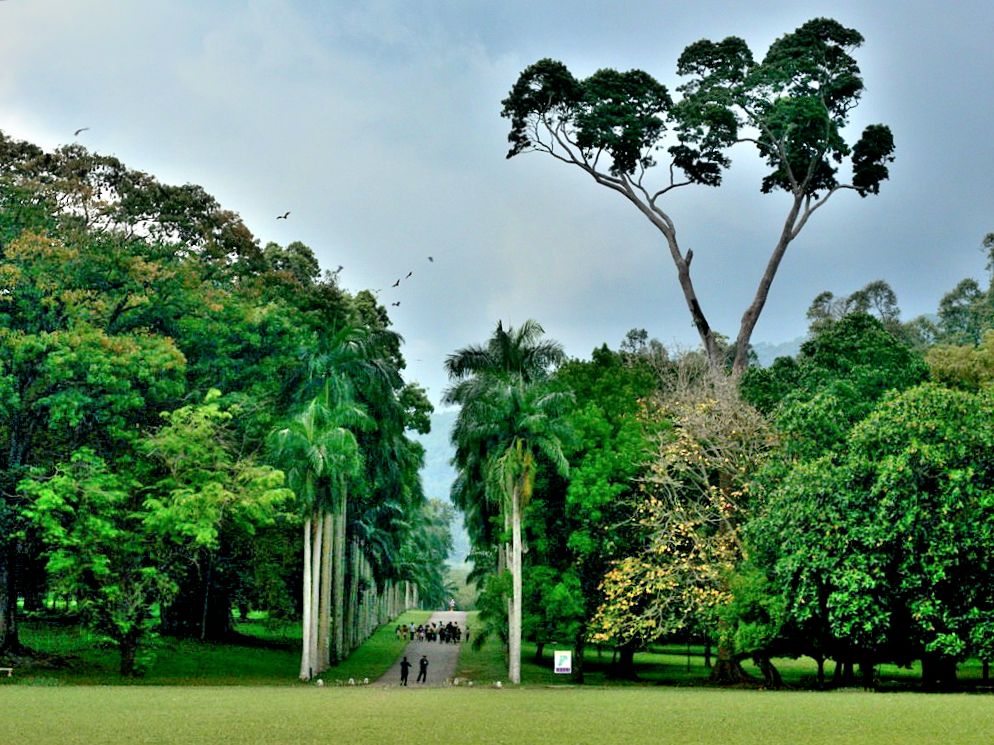
Go to Kandy to see the Sri Dhalada Maligawa and Peradeniya Gardens.
Go to Anuradhapura and Polonnaruwa to see ancient temples which are very beautiful.
Go to Nuwara Eliya to see beautiful villages which look like England. There are many tea estates and Hakgala gardens too.
Go to Unawatuna, Galle and north areas to see beautiful beaches.
Go to Mirissa and Kalpitiya and watch whales.
Go to
Yala National Park & Wilpattu for the best wildlife Safari experiance. Udawalawe to see elephants and Kumana (Yala East) for birdwatching.
There is nothing that you ""Can't Do"" in Sri Lanka and there is
variety of things that you can do depending on your preference.
The currency is the Sri Lankan Rupee. The exchange rates are approximately
115Rs/ USD,
159Rs/ EUR or 183Rs/GBP(The exchange rate for dollar everywhere is
110LR/USD, hotels its 109/USD and only in casinos they give 115/USD
which generally they give in the form of chips in the play tables).
There are coins for 25 and 50 cents (bronze), 1 rupee (old version is
big and silver, new version is small and gold,) 2 rupees (silver,) and 5
rupees (gold,) as well as banknotes ranging from 10- 5000 rupees. Coins
that are more than a few years old are typically in quite bad
condition.
Handicrafts Of Sri Lanka. For reed, cane, cotton, paper, leather,
wood, clay, metal, and gemstones have been transformed and re-expressed
in a array of batiks, toys, curios and jewelery, all exquisite hand
made treasures.
[edit] Credit cards and ATMs
ATMs are located in many places (especially at bank branches) in the
cities and suburbs, less so in the countryside. Be careful of using
credit cards, as fraud is on the rise in Sri Lanka. You can withdraw
from debit cards too (Cirrus, Maestro, Visa Electron etc) where the
logos are displayed. Mostly your card will be replaced by your bank once
you go back to your country
Sri Lanka and South Indian food share a lot in common, and many local restaurants will describe their menus as
Sri Lankan & South Indian.
There are a number of regional variations though, the different types
of hopper, devilled prawns/cuttlefish/chicken/etc. and the common fiery
addition to any curry,
pol sambol made of grated coconut, red chilli powder and lime juice.
The food is very cheap generally, with a cheap meal costing about
a dollar. The most expensive, tourist-orientated places seldom charge
more than ten dollars. The staple food of Sri Lankans is
rice and curry
- a massive mound of rice surrounded by various curries and delicacies.
If you want to eat a cheap lunch you can follow the Sri Lankan crowds
and duck into any of a million small cafes, confusingly called 'Hotels'.
These normally sell a rice and curry packet, as well as 'short eats', a
collection of spicy rolls. This is ideal for backpackers and those who
want to get past the touristy hotels selling burnt chicken and chips -
you're charged by how much you eat, and unless you're absolutely
ravenous it probably won't cost over a dollar.
If you are taking road trips outside Colombo, there are endless
options for places to stop on the road for lunch. Rest houses and hotels
along major roads throughout Sri Lanka have good restaurants, and will
offer both Sri Lankan and Western menus. If you are less adventurous,
you can easily get good sandwiches and soups at these restaurants. These
places have excellent rice and curry plates, and you will be served
many different types of curries over an extremely generous portion of
rice. These meals are extremely delicious and will leave you full and
happy at the end of the meal. Eating will definitely be a memorable
experience in Sri Lanka.
Kottu (Kothu) Roti (a medley of chopped roti, vegetables and your
choice of meat) is a must-have for anyone - tourist or otherwise - in
Sri Lanka. It is uniquely Sri Lankan and tastes best when made fresh by
street vendors. However, several kottu roti restaurants have been closed
down due to their use of stale and old roti, which made some patrons
sick. Use caution, and even better, talk with the locals to figure out
where the best kottu roti restaurants are.
Sri Lankan food is generally spicy. But you can always ask for less spicy options when you are ordering your food.
Other food that you should try are
String Hoppers ,
Hoppers,
Pittu &
Kiribath.
Note that Sri Lankans
eat with their right hands - this
isn't a major problem, because everywhere will be able to provide
cutlery if you can't eat otherwise. But try the Sri Lankan way (tips of
fingers only!), it's harder than it looks but strangely liberating.
There are many upscale restaurants to choose from in the city of
Colombo. There are several fine dining restaurants at the 5 star hotels
which offer both Local and International cuisine. These establishments
are found largely in western Colombo (along Galle Road), though more are
located around Colombo and other major cities.
Fast-food outlets such as KFC, Pizza Hut etc. can be found in major cities.
In Sri Lanka
Water from the tap is not considered to be safe
to drink in the country. However if you are using bottled water (1.5
litre for 60-70 LKR in March 2012) please make sure SLS (Sri Lanka
Standard Institute) label is present. Also in some parts of the country
you'll find hard water due to the high presence of lime in the soil.
Fresh milk, due to the climate, spoils easily, and so is often very expensive. Powdered milk, however, is safe and is often substituted.
Thambili the juice from King Coconut, is very refreshing.
It's sold at the side of streets throughout the island, you know it's
clean as the coconut is cut open in front of you and it's cheaper than
bottled drinks at about R30/- each.
Soft drinks are available almost everywhere, normally in
dusty-looking glass bottles. The local producer, Elephant, make a range
of interesting drinks - try the ginger beer and cream soda.
"Coca Cola" and "Pepsi" also available in large and small sizes
(plastic bottles) including several local soft drink brands - all
available at rapidly multiplying supermarkets all across the country and
grocery shops.
The most common local beer is
Lion Lager (140 LKR in "wine shops" or 200-300 LKR in restaurants in March 2012). For something a bit different try
Lion Stout. It is characterized by it's tar-like oiliness of body and chocolate finish. Other brews include
Three Coins, which is brewed by the Mt Lavinia hotel chain, allegedly to a Belgian recipe.
The traditional spirit is
Arrack, which costs about 4 USD
for a bottle, and is often drunk with club soda. The quality can vary
depending on how much you want to pay. However, widely recommended brand
would be "Old Reserve" and worth paying 7.5 USD for it.
Accommodation in Sri Lanka has been transformed in recent years. What
would be recognized as the modern tourist industry began in the 1960s
with traditional beach hotels built on the west coast which were aimed
primarily at the package holiday crowd and traditional travel operators.
But the past decade has brought a major change, with the growth of
villas, boutique hotels, and small independent and individualistic
properties offering a huge array of choice.
With the end of the civil war and the defeat of the Tamil
terrorists in May 2009, tourist arrivals have been going up,and as there
still aren't a great many decent hotels it's probably better to book
early.
- Buddhist Studies and Pali Language. The universities of Peradeniya [19] and Kelaniya [20] offer variety of Buddhist studies, and Pali language courses in English.
- Meditation. You may find monasteries and meditation
centres that offer meditation courses (generally free of charge) in the
Buddhist Publication Society guide Lanka_monasteries_2008_jan.pdf.
- Mahamevnawa Meditation Monastery is a good place to learn true Buddhism.
- Dancing There are many foreign enthusiasts to learn Sri
Lankan traditional dance under three categories which are Udarata,
Pahatharata and Sabaragamu. And there are distinguished drumming for
those categories.
[edit] Stay safe
Sri Lanka's lengthy and bloody civil war was ended in May 2009, when
the government forces finally wiped out the Tamil Tigers. However,
there might be one or two land mines, which can be troublesome, and the
facilities in northern (and some parts of the east) cities and towns
are war torn. These were the areas where the Tamils lived. The Sri Lanka
Army is currently engaged in rapidly clearing landmines laid out by
LTTE separatists. It's a long and difficult process.
Bombings and assassinations were a firm part of both sides in the
conflict, and there is heavy security in all sensitive locations.
While the separatists have never targeted tourists there have been
deaths, notably in a landmine explosion at Wilpattu National Wild Park
in 2006, and some have been wounded by terrorist actions. War is, after
all, dangerous. In general, though, traffic accidents kill more people
than terrorism.
Violent crime is not usually any more serious a problem for
tourists in Sri Lanka than it is anywhere. There has been an increase in
violent crimes involving tourists in the past few years, but it is
still very rare. Tourists should exercise the same care and attention
as they would at home.
Con artists and touts are a serious problem throughout all
tourist areas. Using the services of a tout for accommodation, local
travel, etc. will most likely increase the price. First time travelers
to Sri Lanka may find themselves the victim of scams, however seasoned
travelers to Sri Lanka are very rarely scammed and it is simple to avoid
becoming a victim of scammers by taking precautions:
- Do not believe anyone who claims to be a professional (e.g.
airline pilot), or in charge of a location (like a bus terminal) without
proof.
- Scams involving gemstones are common. Do not buy with the intention of selling them in your home country for a profit.
- Be on guard for anybody trying to help you by giving you
unsolicited directions or travel advice. Take any advice from taxi and
auto drivers with a grain of salt, especially if they tell you the place
you want to go to is closed, dangerous, non-existent etc. If you are
unsure, check a map.
- If you have been told your hotel is closed or full, give them a
call. If you are a first time visitor to Sri Lanka, don't admit it as
it will make you a target for the scam artists.
Also, beware of single males who wish you to accompany them after a
religious service. First, ask other members if the person is honest and
reliable. Dishonest Sri Lankans, although rare, (mostly male) are very
adept at talking tourists out of their money, and generally prefer this
method over violence. They frequent the Galle Face Road area surrounding
the tourist hotels, Galle Face Hotel and the Holiday Inn. Their "modus
operandi" is to tell you upfront that they don't want anything from
you, only to talk. There may be an auspicious day occurring in Sri
Lanka and they will use this to coerce you to accompany them to a temple
or church. They will wine, dine, and pay for everything, and then,
after two days, will begin to extort money from you. This does not
happen commonly, but there have been a few cases - so beware.
Although snake bites are extremely rare among tourists
(comparable to being struck by lightning), anyone bitten should seek
prompt medical care. This is true even if the bite doesn't result in
any pain and swelling. The National Emergency number is 119. In Colombo,
dial either 119 or if you want an emergency ambulance - 110.
In June of 2009, the Sri Lankan government lifted travel alerts
after the military defeat of rebel insurgents in the north of the
country, though it is advisable to check with the local travel advisory
bureau in your country if there is any doubt.
There are tiny little flies that live in the sand. Any contact
with the dry sand usually results in bites and subsequent painful
scratch. So avoid even a little sand on your skin, including legs.
[edit] Stay healthy
- Vaccination are recommended for Hepatitis A+B and
Tetanus. Also, the Typhus vaccination outside of tourist areas
especially in the wet season. The CDC also recommends vaccination
against Japanese encephalitis[21].
- Dengue fever:
During the rainy season use mosquito repellent. When head and joint
aches occur get a blood check. There is no vaccination yet.
- Malaria : Gampaha (e.g. Negombo), Colombo, Kalutara, Galle, and Nuwara Eliya districts are considered malaria free, as is the city (but not the entire district) of Kandy. Elsewhere, malaria exists and is most likely in Anuradhapura. In the dry season, using DEET repellent
for a mid-day road or train trip to Kandy (including visits to the
Peradeniya Gardens) or Nuwara Eliya should suffice. Risk increases after
sunset. Malaria prophylaxis (anti-malarials) are warranted for
trips to the north (especially Anuradhapura), east, and southeast
(however some types are not available locally, and it may not be as
effective as what you could obtain back home.)
- Yellow fever: A yellow fever vaccination certificate is required from travelers over 1 year of age coming from infected areas.
- Filaria: Sri Lanka is the first country in the South Asia region to eradicate Filaria [22].
- Polio: Sri Lanka is considered Polio free.
Visitors should avoid drinking water from the tap. It is best to stick to bottled water for both drinking and teeth brushing.
[edit] Respect
There are several customs that (for Westerners) take a bit of getting used to.
- It is customary to remove shoes and wear respectful attire (i.e. no miniskirts, tank tops, short pants etc.)
when visiting temples. It is also the custom to remove shoes before
entering a home, though this is not as strictly followed as in places
such as Japan.
- Never touch or pat the top of the head of Buddhist monks, including children who practice at a temple.
- Do not turn your back to (or be alongside) a Buddha
statue when within a reasonable distance (observe what others are
doing). This includes posing for photos. It's OK to photograph a
statue, but all persons should be facing it.
- Public nudity is illegal in Sri Lanka - nude/topless
sunbathing and skinny dipping should be avoided, except in the private
beach resorts which allow it.
- Although much latitude is given to tourists, it is more polite to use your right hand when shaking hands, handing money and small objects, etc. Of course you can use both hands for something big and/or heavy.
- Be respectful to monks. There's no particular etiquette
for Westerners - just be polite. Always give them a seat on a crowded
bus (unless you're disabled or very elderly).
- It is highly controversial to discuss politics, particularly the Sinhalese/Tamil divide or the LTTE.
The 26 year old civil war which ended in 2009 has seen thousands of
attacks throughout the country, including suicide bombings and massacres
which have killed scores of politicians and civilians on both sides
alike.
- No photography of sensitive locations (inside and
outside), and inside of shopping malls and tea factories (outside OK).
Be especially careful in Fort, Colombo (except on the beach). If
soldiers are guarding something, it probably shouldn't be photographed.
Don't rely on signs alone, as sometimes they are old or missing. For
example, one end of a bridge may have a "No Photography" sign, but not
the other.
- Seemingly innocuous public displays of affection between
lovers such as kissing and/or hugging may be culturally frowned upon as
it is considered to be private behaviour but it is acceptable in
functions and establishments designated for adults such as nightclubs,
casinos and beach parties. Much lenience is given to foreigners and
holding hands and public affection between parents and their children is
not frowned upon.
[edit] Contact
The country code for Sri Lanka is
94. Remove the intercity prefix (
0)
before the area code when dialling internationally into the country
(ie, 0112 688 688 becomes +94 112 688 688) when dialling from abroad).
The two next numbers after 94 represents the area code, they are
different for every district for more information see
Telephone numbers in Sri_Lanka.
[edit] Mobile
The use of GSM cellphones is widespread and the coverage is good.
Dialog and Mobitel are two operators that have sales offices at
the airport inside the arrivals lounge. Dialog Mobile (Market Leader)
has the widest coverage in the country including rural areas and has the
best quality GSM / 3G / HSPA + network. Mobitel also has a 3G/HSPA+
network. All the mobile operators are having same call rates due to
floor rate tariffs. Therefore it is advisable to go to the network which
offers you the best quality. All Mobile Operators offers cheap IDD Call
rates.
If you want to surf internet, best way is to buy a HSPA dongle
and a Mobile Broadband connection. Dialog Mobile, Mobitel and Airtel
offers prepaid Mobile Broadband services which can be activated and used
immediately.
Dialog is the Vodafone Roaming Network in Sri Lanka and offers
the best range of Value added services for Roamers and the rates are
cheaper. Etisalat and Airtel also provide cheap roaming rates specially
to India.
Mobile Phones are cheaper and widely available.